For a wrist between 14 and 16 cm, the right size for a vintage women's watch is almost always between 20 and 28 mm across. But the diameter is not the real question: what decides whether a watch sits well is the bracelet. A link bracelet can be shortened, a rigid bangle cannot. Right now, out of 69 available watches, 49 close properly on a 14 cm wrist and 43 on a 16 cm one.
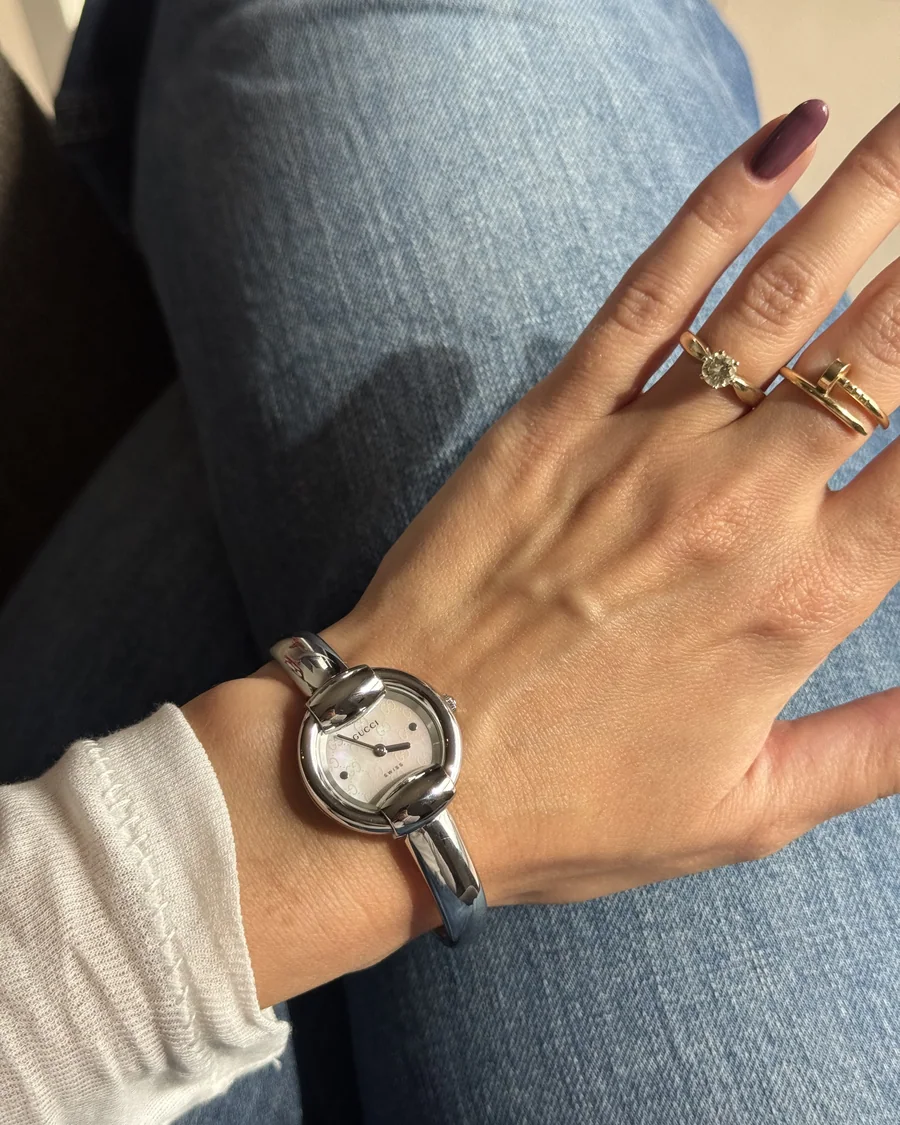
Women's watches of the Eighties and Nineties were small. In our selection, diameters run from 15 to 32 mm, with a median of 25 mm. Today a women's model considered «small» in a shop often starts at 28 mm: on a slim wrist it reads as a men's watch.
The practical rule is visual. Look at your wrist from above: the case should sit within the flat part, without reaching the wrist bone. If the lugs — where the bracelet attaches — go past that point, the watch tilts and the bracelet works against you.
These are starting points, not rules: a dark dial makes a watch look smaller, a wide bezel makes it look larger.
This is where it is decided, and it is the part that sales listings almost always leave out. Three types, three different behaviours.
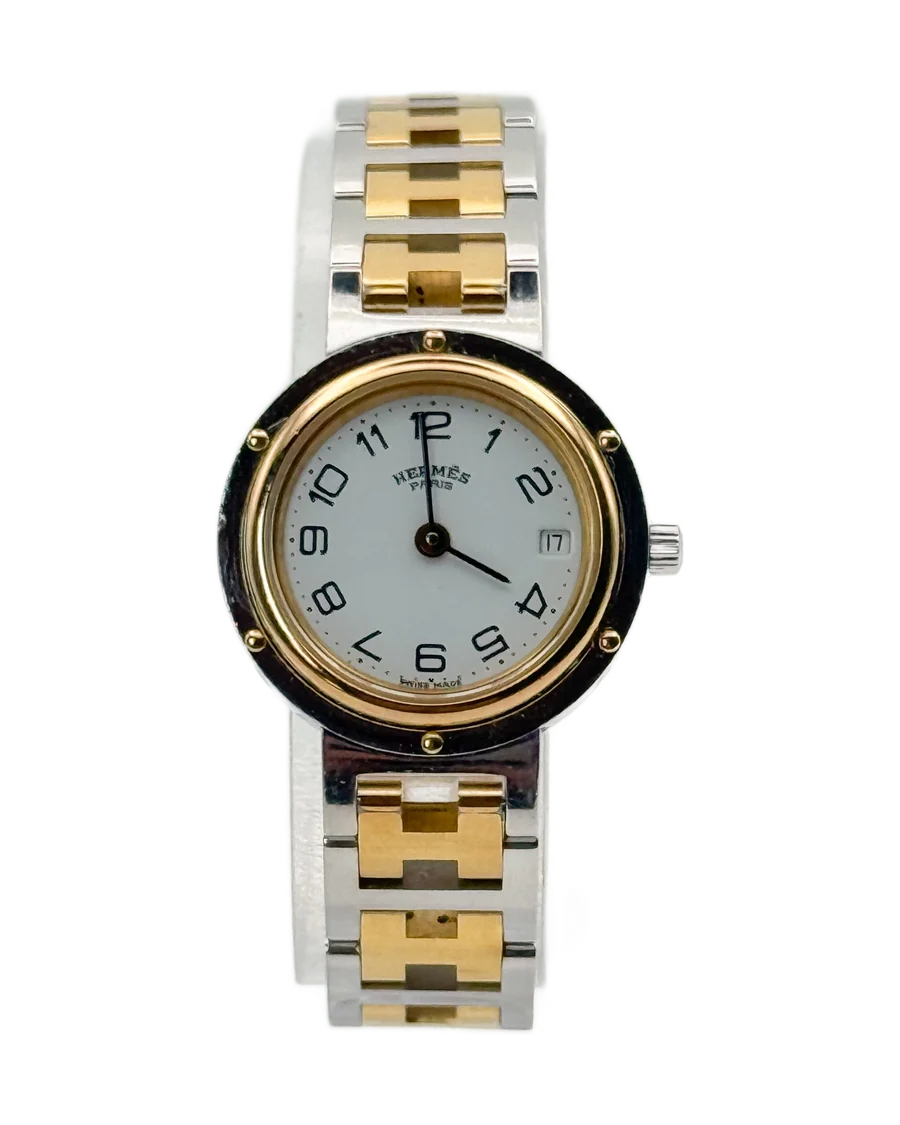
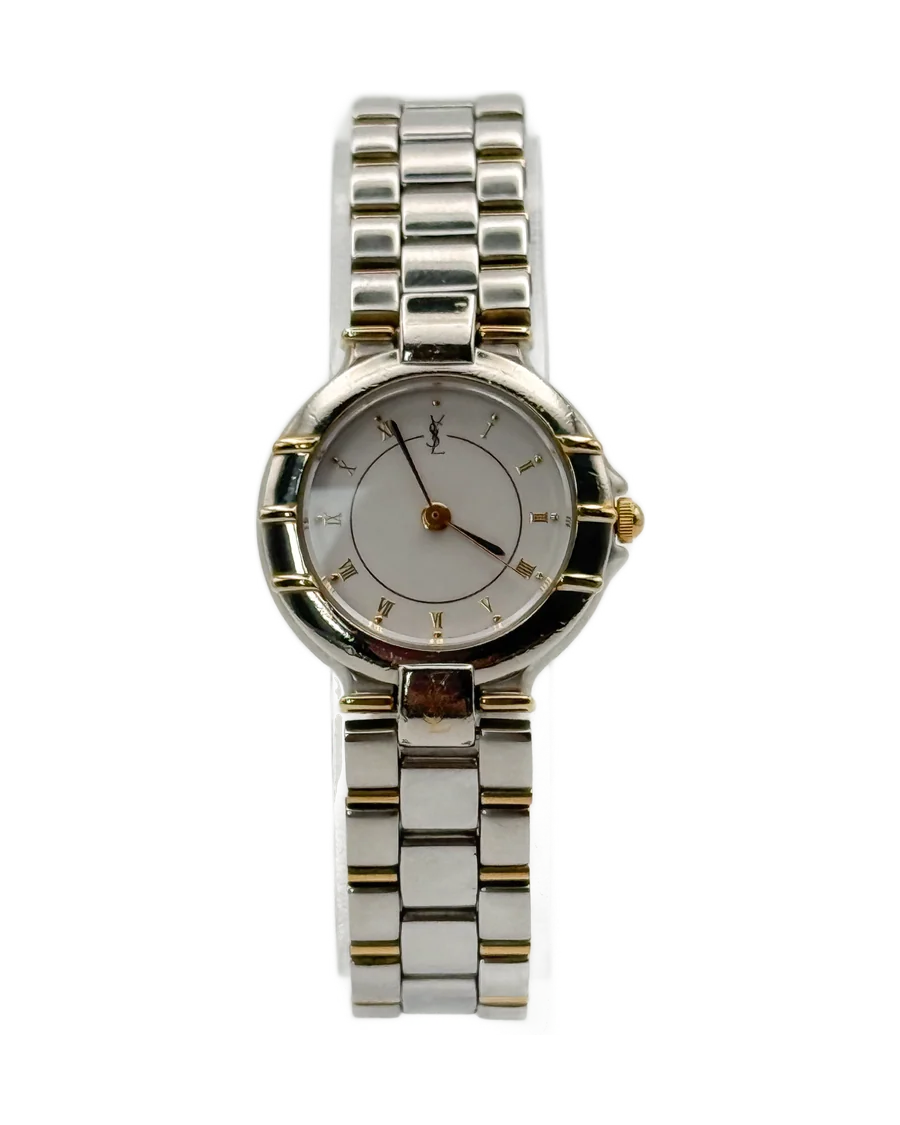
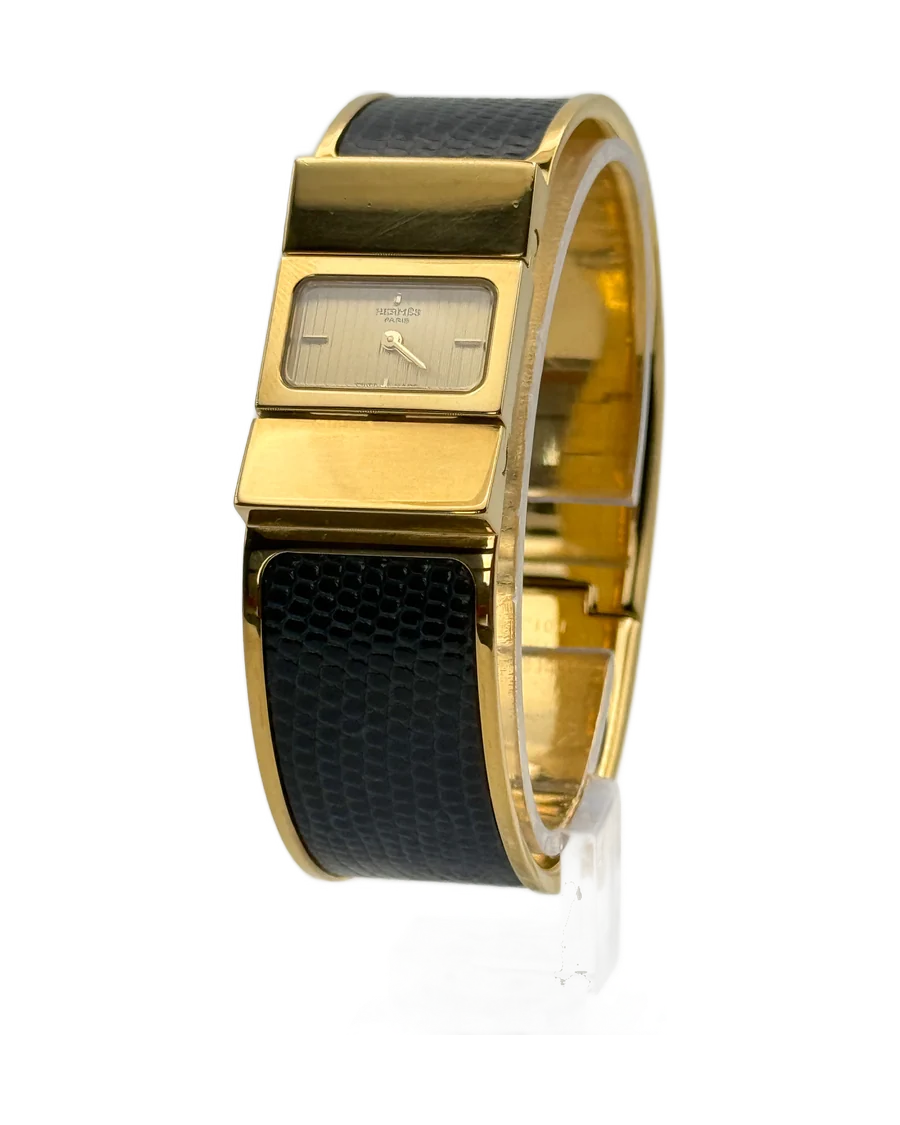
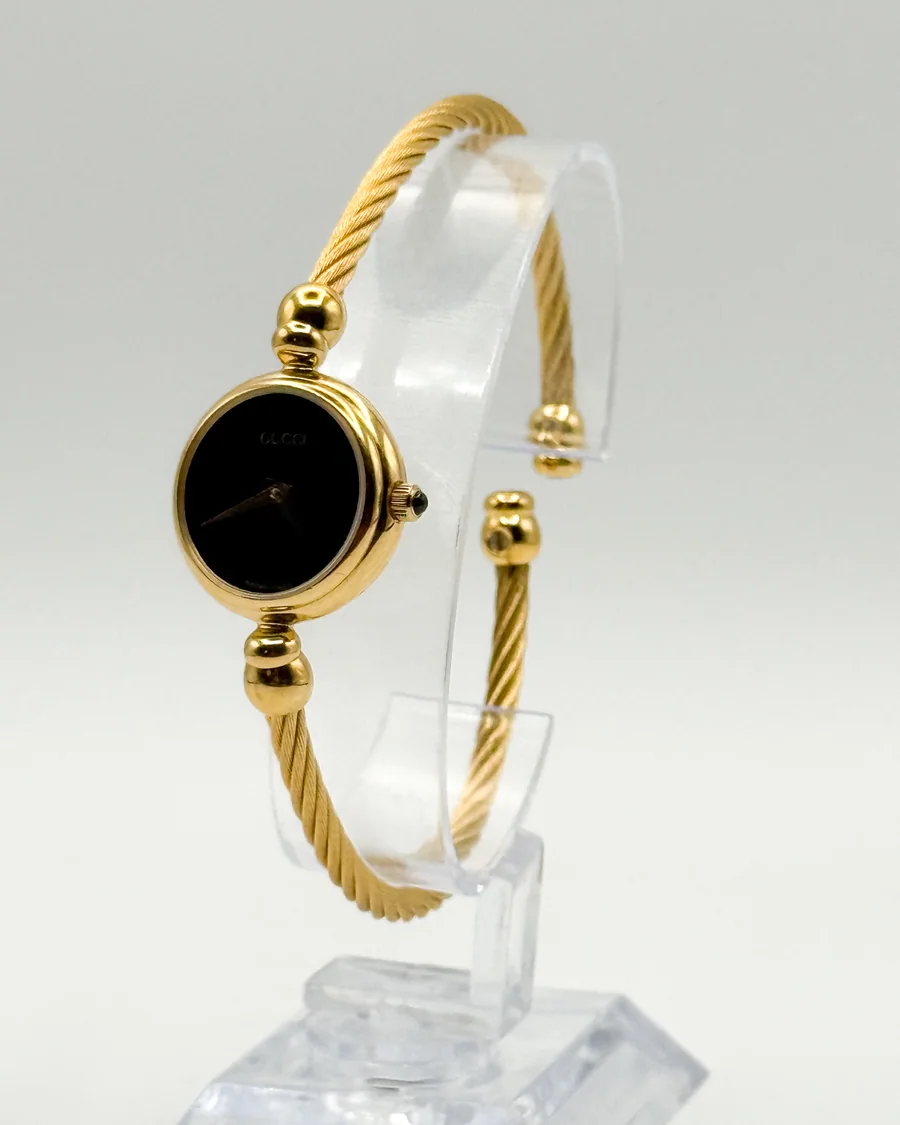
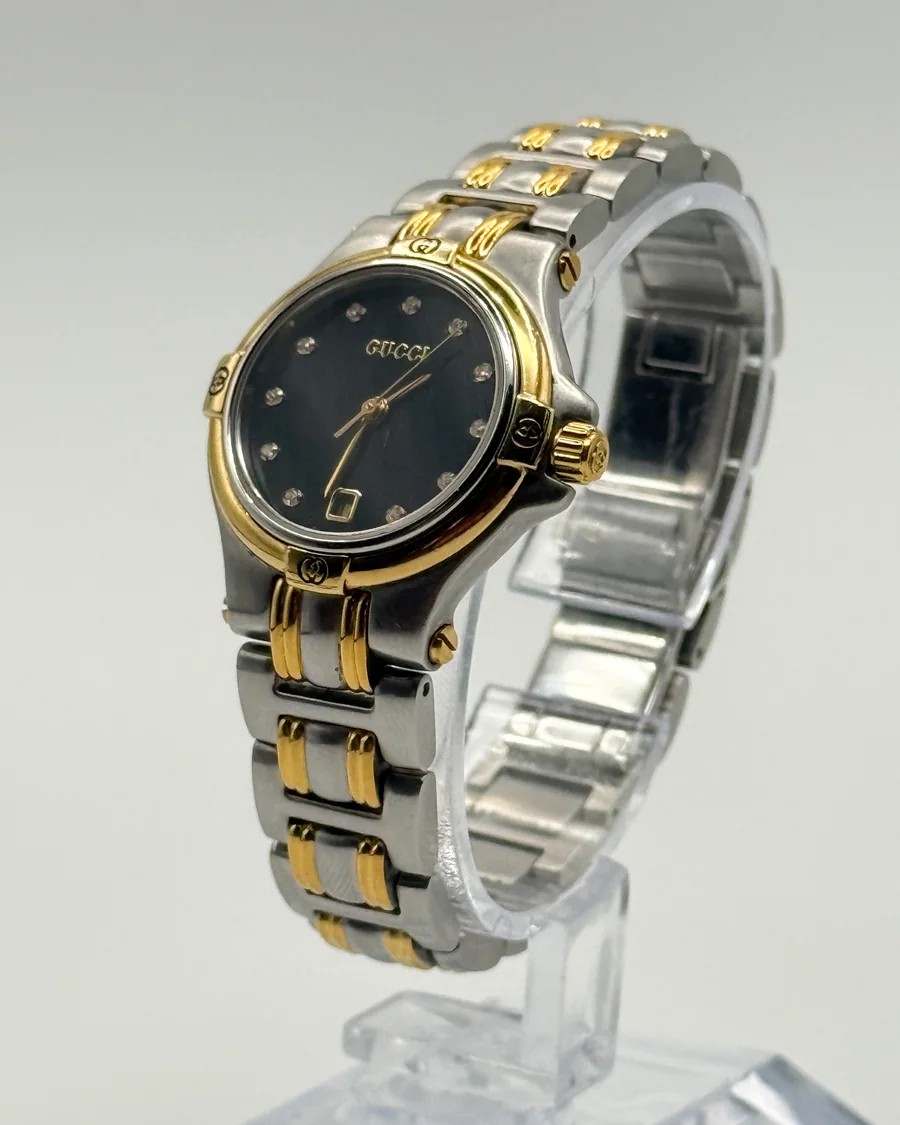
Half a centimetre of difference between morning and evening is normal. If you are between two sizes, for a link bracelet take the larger one and remove a link; for a bangle take the smaller one.
On every listing we give the maximum circumference, measured by hand and not estimated from a photograph. Enter your wrist once and every watch in the catalogue marks itself: fits you, borderline, too small, or too loose when it is a rigid bangle.
With «Real size» the case appears on screen at its true dimension, to hold against your wrist before deciding.
See the watches for a 15 cm wrist
As a starting point, a case between 24 and 28 mm. What matters, though, is the bracelet circumference, which has to close at 15 cm or a little more. In today's selection, 52 watches suit a 15 cm wrist.
No. A bangle is a closed circle of fixed size: the only option is choosing the right size. If it is more than a centimetre larger than the wrist it rotates, and the dial ends up underneath.
Rarely. Original links are no longer produced and generic ones are easy to spot. Removing links is almost always possible. When a watch comes with spare links, we say so in the listing.
Nearly all of them. In our selection diameters run from 15 to 32 mm, and models above 30 mm are usually unisex versions.
