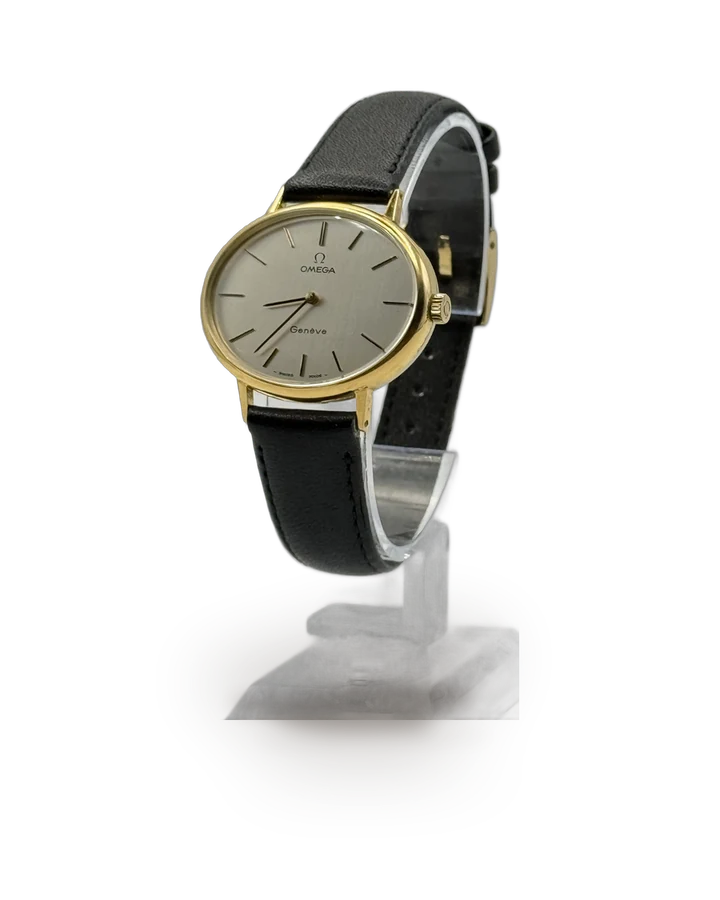
With the watches we handle the choice is largely made already: in the Eighties and Nineties the fashion houses fitted almost nothing but quartz movements. So the real question is not which of the two is better — an old argument with no winner — but what a thirty-year-old quartz watch asks of the person wearing it, and what a manual-wind one of the same age asks instead.
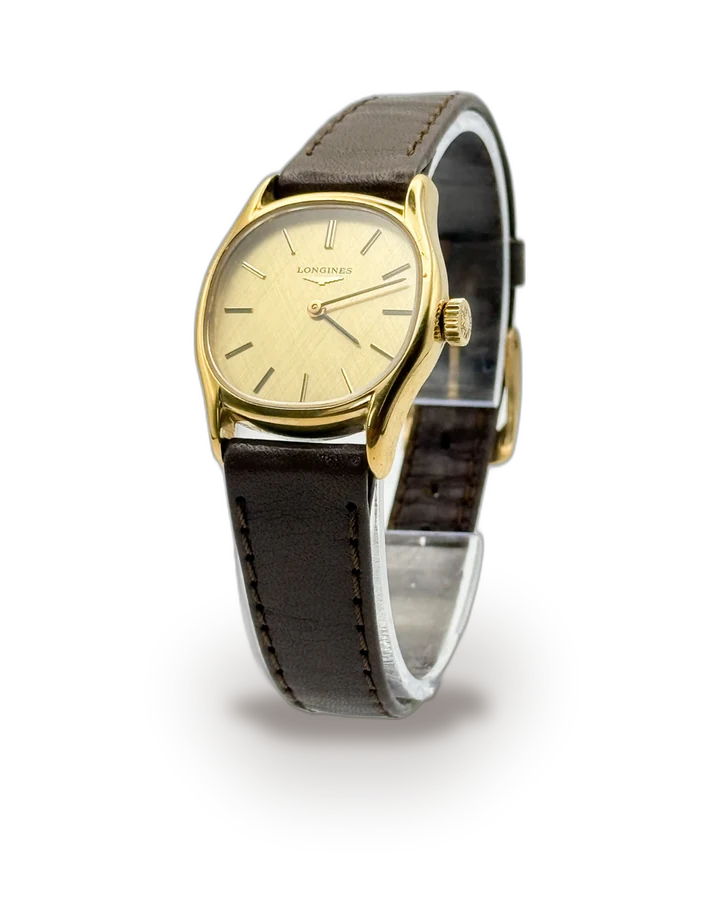
In a quartz watch a battery makes a crystal vibrate at a fixed frequency, and the second is derived from those vibrations. In a manual-wind watch a spring, which you wind yourself with the crown, unrolls through a train of wheels. The first asks for a battery now and then, the second for a gesture every day.
Little, as long as you wear it. A battery generally lasts between two and five years — on the small women's calibres, which take small cells, you are at the lower end of that range. The accuracy quoted by the makers is in the order of fifteen seconds a month: a mechanical watch of the same period can lose as much in a single day.
It keeps running while it sits in the drawer, and that is where the real problem starts.
An exhausted battery left inside the watch will, sooner or later, leak. What comes out is corrosive: it attacks the copper wire of the coil, oxidises the circuit tracks and settles on the pivots of the wheels. The damage does not stop by itself and is invisible from outside until the watch stops — often when changing the battery is no longer enough.
It happens above all to watches kept in a drawer, and it is the most common way a vintage quartz dies. It is also the easiest to avoid: if you stop wearing it, have the battery taken out. A watch without a battery waits for years without harm; one with a dead battery inside does not.
One sign worth knowing: if a new battery runs down in weeks rather than years, it is almost never the battery's fault. It usually means corrosion or a short in the movement, and the watch should be opened by a watchmaker before it gets worse.
Every watch we sell leaves with a fresh battery and a checked movement. The advice is for afterwards, and it is why we write it even though we sell almost nothing but quartz.
Here quartz has a limit that mechanical movements do not. A mechanical movement can almost always be repaired: parts are remade, found on donor movements, adapted. A quartz module from the Nineties, if it burns out, sometimes simply cannot be replaced any more: production has ended and spares come from old stock, specialist dealers and other watches taken apart.
This is not an argument against buying quartz — there are tens of thousands of them working perfectly well — but it is why the dead battery matters so much. Damage you can prevent is the only kind you actually have power over.
One gesture a day, ideally at the same hour: you turn the crown until you feel resistance, and there you stop. On modern watches a clutch prevents you from going further; on period ones that protection is often missing, so the rule «stop at resistance» should be taken literally. And you wind it off the wrist: winding it on the wrist pushes the crown sideways, and the winding stem is the part that breaks first.
Every three to five years, on a watch of this age, it needs a service: the oil dries, and a movement running without oil wears itself out. If it sits still in a drawer nothing bad happens — unlike quartz, there is nothing inside that can leak.
Out of 69 available watches, 68 are quartz and 1 are manual wind. This is not an editorial choice: it is what the fashion houses fitted in those years. The few mechanical pieces that pass through our hands come from actual watch manufactures.
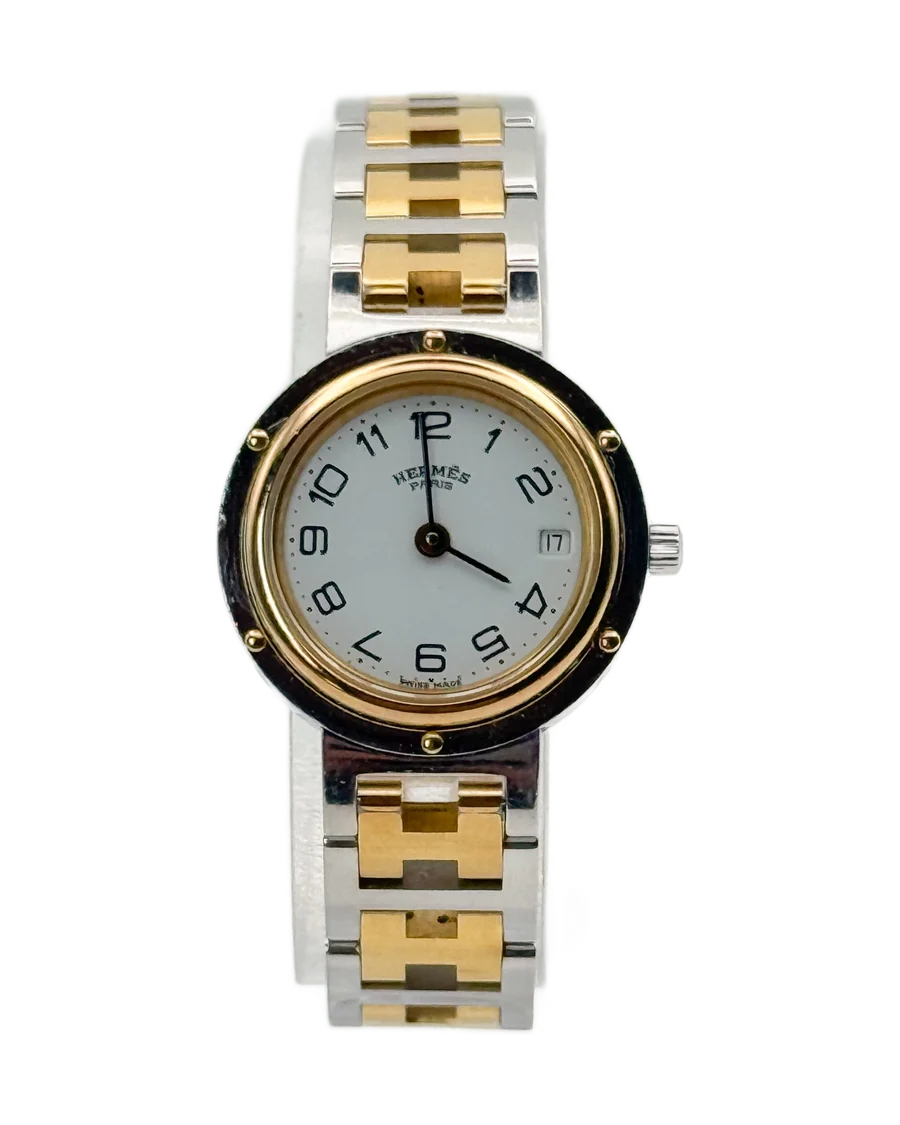
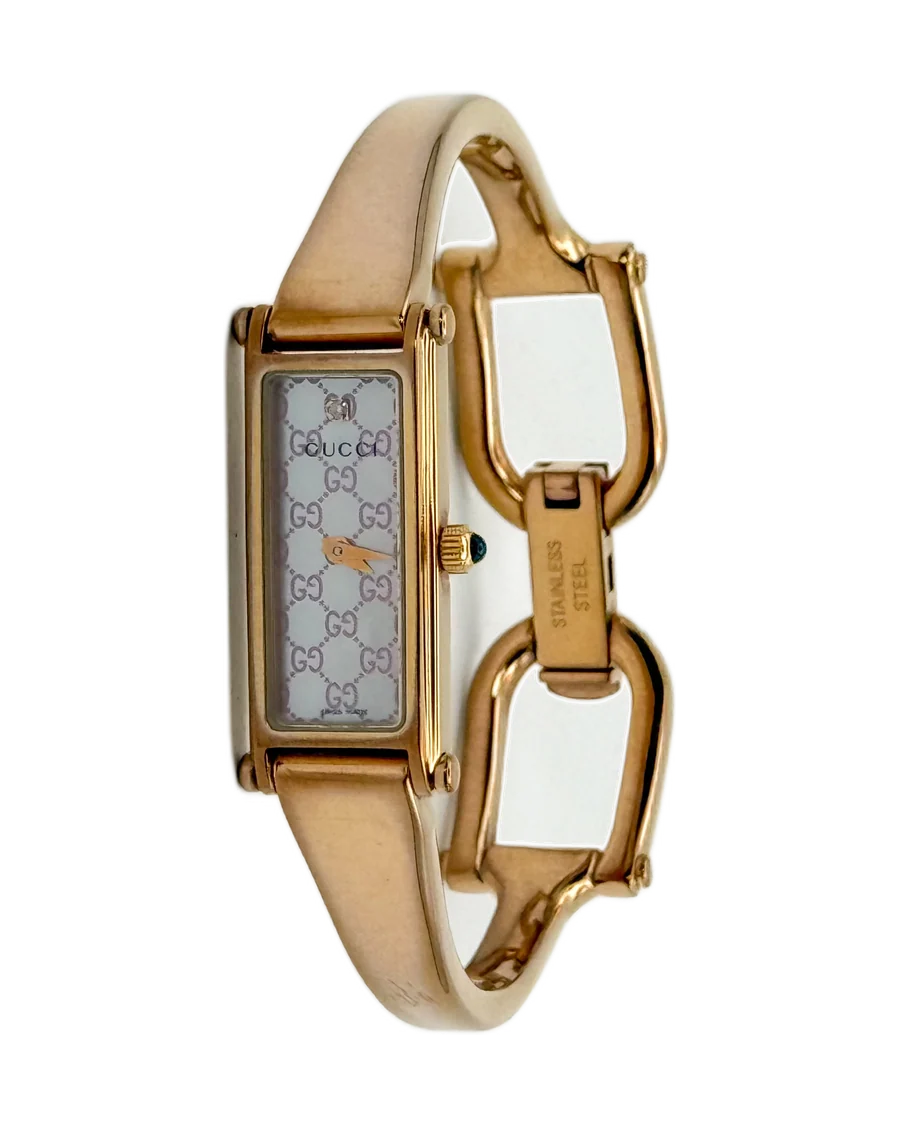
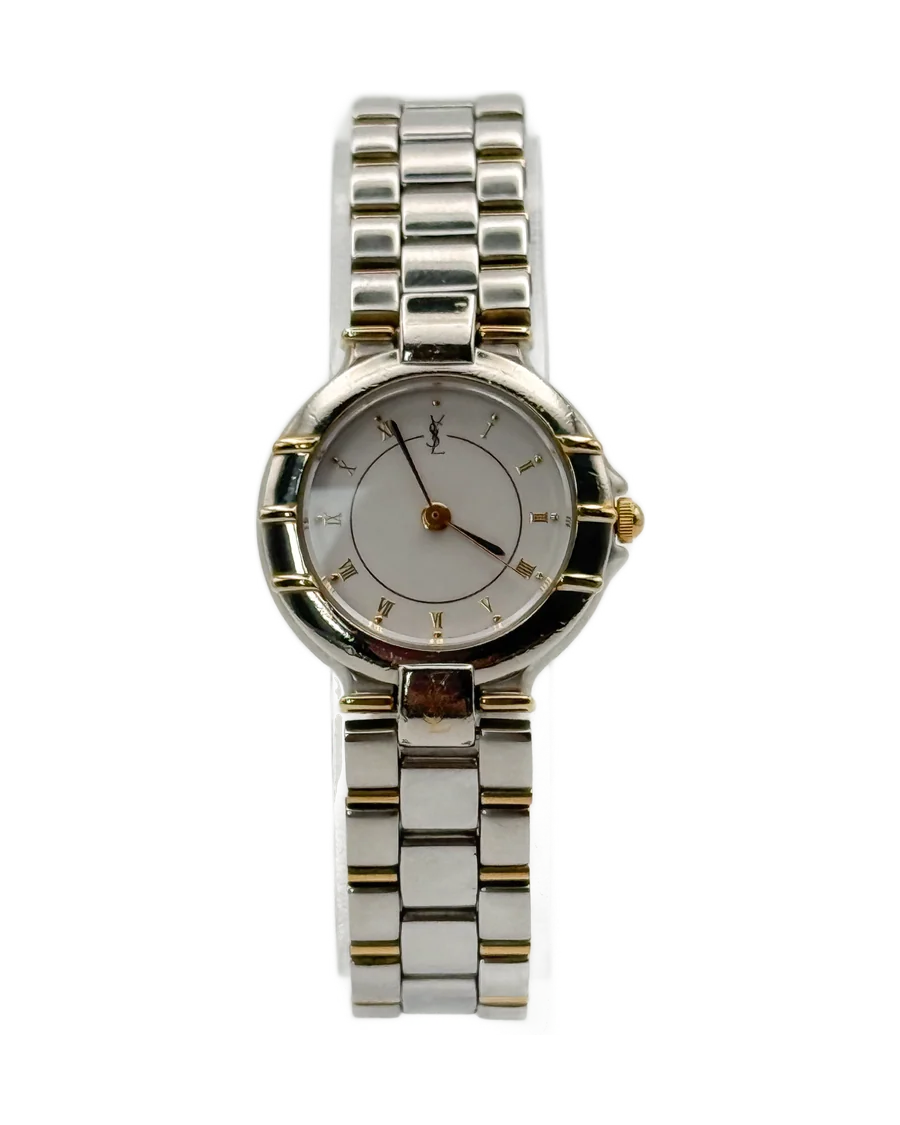
Generally between two and five years. On the small women's calibres, which take small cells, it is nearer two or three. Every watch we sell leaves with a fresh battery.
No, and it is the most useful advice on this page. An exhausted battery left inside leaks and corrodes the movement from within. If the watch is going to sit unused, have the battery removed: without one, it waits for years without harm.
It depends what has broken. Battery, contacts, seals, wheels: yes. The electronic module, if it has burnt out, sometimes cannot be found any more, because production ended long ago and spares come from old stock or other watches. That is the limit of the genre, and it is why it pays not to let the movement corrode.
On modern movements, almost not: a clutch stops the winding. On period ones, like those we handle, that protection is often missing, so yes. The rule is simple: turn until you feel resistance and stop there, with the watch off your wrist.